BarleyMicroBreed at the Halfway Mark Unraveling Root-Soil-Microbiome Interactions for Drought-Resilient Barley
The project is making significant progress towards identifying barley genes governing adaptive root trait responses – both on the morphological, physiological and microbiome side. Well into the Validation Phase of the project, it is very rewarding taking a step back and reviewing what we have achieved so far.
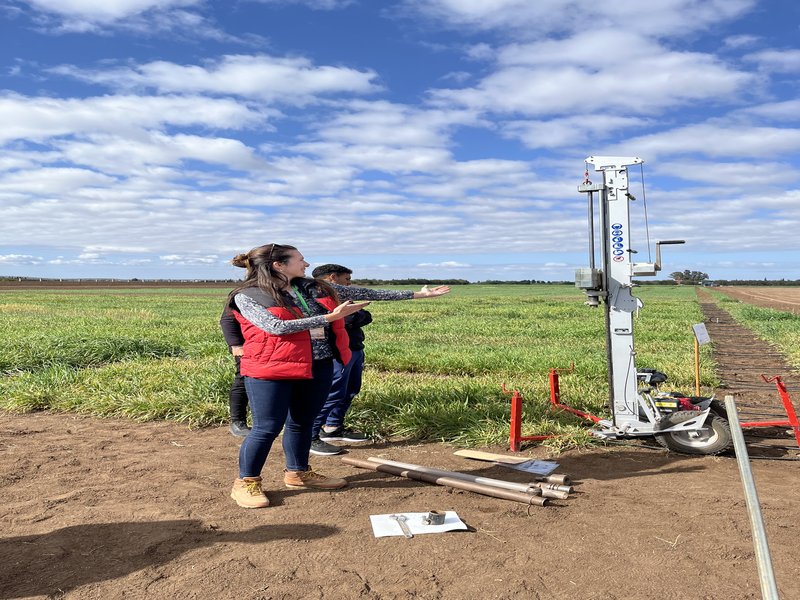

The increasing frequency of droughts and heat waves presents a major challenge for global barley production. To maintain yield stability under these increasingly unpredictable conditions, future crop breeding must move beyond traditional aboveground traits and incorporate the hidden half of plants, namely their root systems and associated microbiomes. The Eu Horizon project BarleyMicroBreed (BarleyMicroBreed) represents an international effort to address this challenge. The project is a collaboration between Aarhus University (Denmark), Copenhagen University (Denmark), BOKU University (Austria), ICARDA (Lebanon), MetasysX (Germany), Photon Systems Instruments (Czech Republic), Eurofins Genomics (Germany) and Lantmannen (Sweden). With field experiments spanning Europe, North Africa, and the Middle East, and strongly supported by the extensive field infrastructure and expertise of ICARDA, the project combines breeding, genomics, microbiome science, root phenotyping, artificial intelligence, and systems biology to identify the mechanisms that allow barley to maintain productivity under drought and heat stress.
A Unique Two-Continent Field Platform
One of the defining strengths of BarleyMicroBreed is its unprecedented field campaign. More than 560 genetically diverse barley accessions were evaluated across five highly contrasting field environments distributed across three continents. These sites include Austria, Morocco, and Lebanon and were deliberately selected to represent a broad range of climatic and edaphic conditions, from temperate Central European agriculture to extreme Mediterranean drought environments.
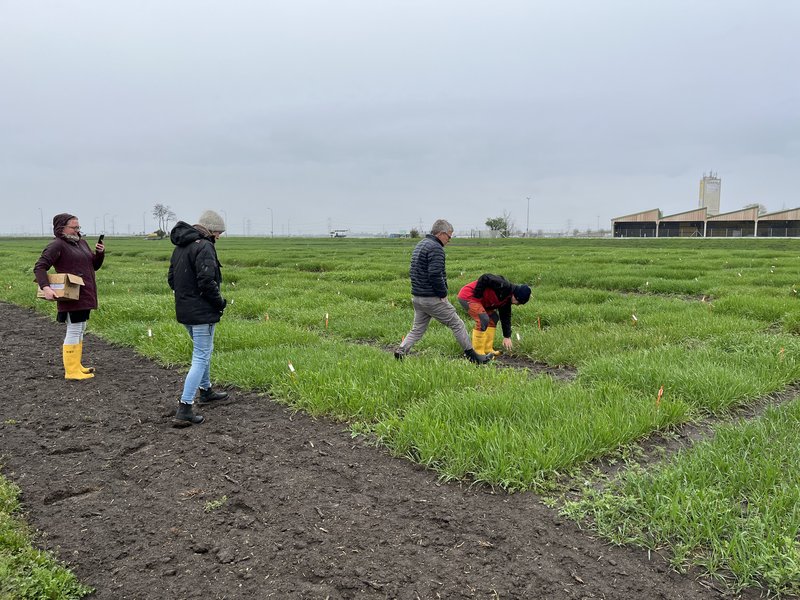
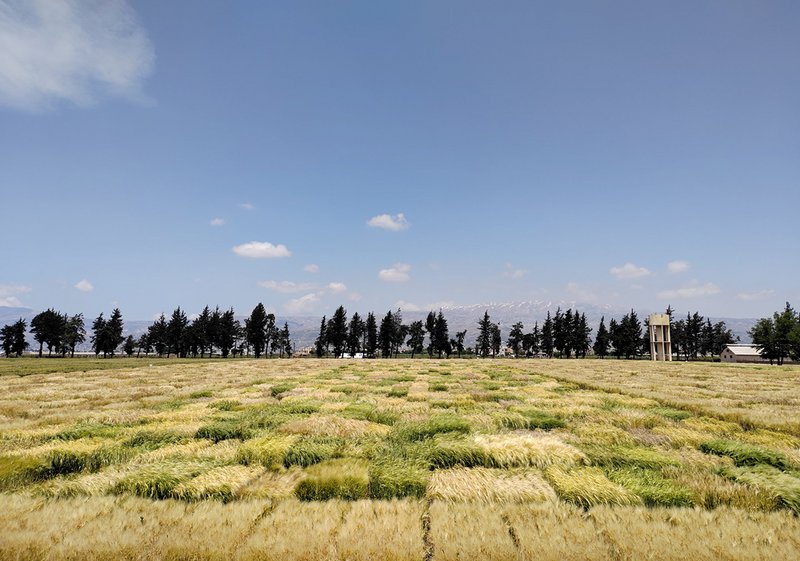
The Austrian site at Raasdorf, BOKU University, serves as a temperate reference environment with deep, fertile Chernozem soils and moderate rainfall. In contrast, the Moroccan locations (ICARDA) at Marchouch and Sidi El Aydi expose barley plants to severe drought and heat stress. The Lebanese sites (ICARDA) at Terbol and Kfardan contribute additional environmental complexity through high-altitude conditions, cold winters, and terminal drought stress. Together, these sites create a natural laboratory in which genotype-by-environment interactions can be studied under realistic agricultural conditions.
The scale of this effort is remarkable. Rather than examining root traits in a handful of model genotypes, BarleyMicroBreed investigates hundreds of elite breeding lines, landraces, and diverse germplasm resources. This large-scale field platform allows researchers to identify root architectures and microbial partnerships that consistently contribute to yield stability across highly contrasting environments. The resulting datasets represent one of the most comprehensive resources currently available for studying cereal root adaptation to climate change.
Root Systems as Drivers of Climate Resilience
A central objective of the project is to understand how root system architecture and function contributes to drought resilience. Traditional breeding has focused primarily on aboveground traits, yet roots ultimately determine how effectively plants acquire water and nutrients from the soil.
Field phenotyping performed within BarleyMicroBreed revealed substantial variation in root growth trajectories among barley genotypes. Particularly striking were differences in root angle plasticity. In drought-prone Moroccan environments, barley varieties possessing steeper root systems were able to explore deeper soil layers and access water reserves unavailable to shallow-rooting genotypes. However, perhaps even more important than a specific root angle was the ability to modify root growth according to local environmental conditions. Preliminary evaluation of the data shows that genotypes exhibiting high root angle plasticity depending on environmental alternations consistently showed greater yield stability across environments than varieties with rigid root growth patterns.
Looking Beyond the Root on the Microbiome Composition and Rhizosheath Formation
While root architecture determines where plants forage, the microbiome influences how efficiently they acquire resources. For this reason, BarleyMicroBreed adopts a holobiont perspective, viewing plants and their associated microorganisms as an integrated biological system.
A major innovation of the project is the investigation of microbiome composition along environmental gradients. Soil microbial communities differ substantially between Austrian, Moroccan, and Lebanese sites due to variations in soil chemistry, temperature, moisture, and management history. Rather than treating this variation as experimental noise, BarleyMicroBreed seeks to understand how these microenvironment-dependent microbial communities contribute to plant performance.
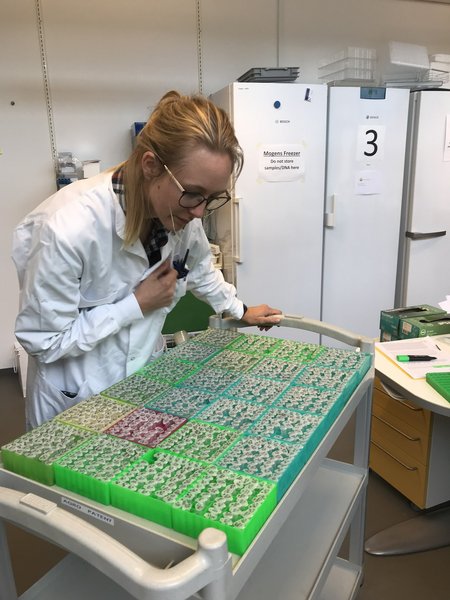
Team members at Aarhus and Copenhagen Universities decipher how root traits influence microbiome recruitment and how beneficial microorganisms, in turn, affect root growth and function. Particular attention is being given to microbial communities associated with drought resilience, nutrient mobilization, and stress mitigation. The project aims to identify microbial assemblages that improve water uptake efficiency, enhance nutrient acquisition, and support stable grain production under challenging environmental conditions.
This work is especially important because future agricultural productivity will depend not only on plant genetics but also on the capacity of crops to establish productive partnerships with soil microorganisms under increasingly stressful conditions.
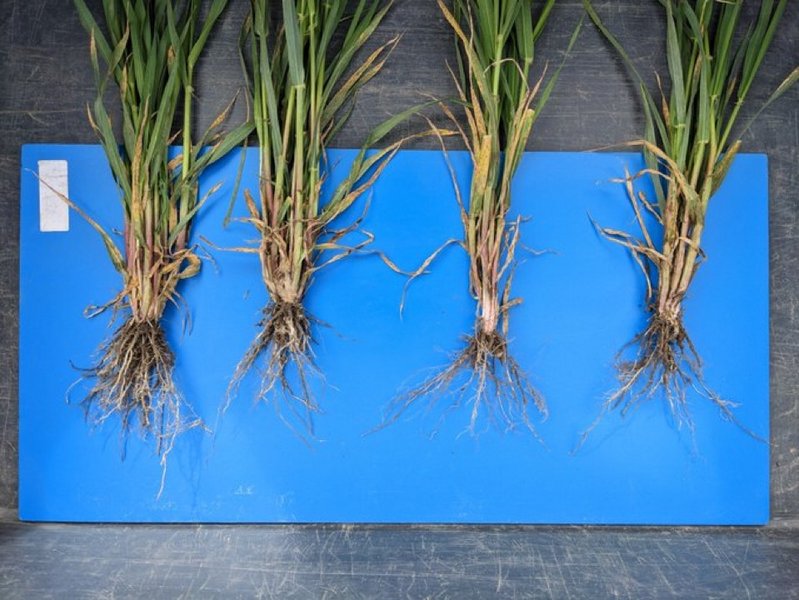
The team at BOKU University investigate the role of root hairs and rhizosheath formation. Rhizosheaths consist of soil particles that adhere to root surfaces through interactions among root hairs, mucilage, and microbial activity. These structures create a specialized microenvironment around roots that improves water retention, nutrient acquisition, and microbial colonization.
Field observations demonstrated that genotypes with robust rhizosheath formation frequently performed better under drought stress. Long root hairs and extensive rhizosheaths increase the effective contact area between roots and soil, enhancing phosphorus acquisition and improving water extraction from drying soils. In the extreme Moroccan environments, reduced rhizosheath formation was often associated with yield penalties under drought and heat stress.
These findings suggest that future breeding efforts should not only target root system architecture but also functional root traits that govern interactions with soil particles and microbial communities.
Integrating Genomics with Phenomics
To understand the biological mechanisms underlying drought resilience, BarleyMicroBreed combines large-scale field phenotyping with advanced genomics and computational approaches. Genome sequencing, SNP analysis, microbiome profiling, metabolomics, and image-based phenotyping are integrated to identify candidate genes and biological pathways associated with adaptive root traits.
The project has also invested heavily in innovative phenotyping technologies at BOKU University and PSI. Controlled-environment studies employ rhizobox systems, near-infrared imaging, and automated root analysis pipelines. These approaches allow continuous monitoring of root development and stress responses while maintaining roots in biologically relevant conditions. Advanced image analysis tools extract quantitative information on root growth trajectories, branching patterns, root hair development, and water-use dynamics.
The growing integration of artificial intelligence and machine learning within the project promises to accelerate the identification of predictive trait combinations linking root architecture, microbiome composition, and yield performance.
Synergies with Root2Res
An exciting recent development is the growing collaboration between BarleyMicroBreed and Root2Res. Both projects independently converged on shovelomics-based field root phenotyping approaches, enabling direct comparison of root trait datasets generated across different crops and environments. This methodological harmonization creates opportunities to investigate universal principles governing root adaptation to environmental stress.
Joint analyses will allow to explore how environmental conditions shape root growth trajectories, how plasticity contributes to resilience, and whether common root ideotypes emerge across species. The collaboration exemplifies how large European research initiatives can combine resources to accelerate progress toward climate-resilient agriculture.
Outlook Across the Work Packages
As the project enters its later phases, the integration of data generated across all work packages becomes increasingly important. Field trials have successfully established a large datasets on barley root adaptation across environmental gradients. Genomic analyses are identifying candidate loci associated with root traits and microbiome interactions. Microbiome studies continue to reveal how soil communities contribute to plant performance under stress. Functional phenotyping platforms are uncovering the mechanisms underlying root plasticity, root hair development, and rhizosheath formation. Genome editing efforts are beginning to validate candidate genes identified through these integrated analyses.
Ultimately, BarleyMicroBreed aims to deliver more than scientific knowledge. The project seeks to provide breeders with concrete genetic markers, validated root ideotypes, and microbiome-informed strategies that can be incorporated into future breeding programs. By combining large-scale field experimentation, advanced phenotyping technologies, microbiome science, and systems-level analyses, BarleyMicroBreed is laying the foundation for a new generation of barley varieties capable of maintaining productivity under increasingly harsh climatic conditions.