
Plant-soil interactions for sustainable agriculture
Professor Mo Bahram’s research focuses on soil as a complex habitat hosting diverse microbial communities that drive key ecosystem services. His journey into microbial ecology has taken him from his childhood fascination with insects and mushrooms to leading groundbreaking research at Aarhus University’s Department of Agroecology in Flakkebjerg.

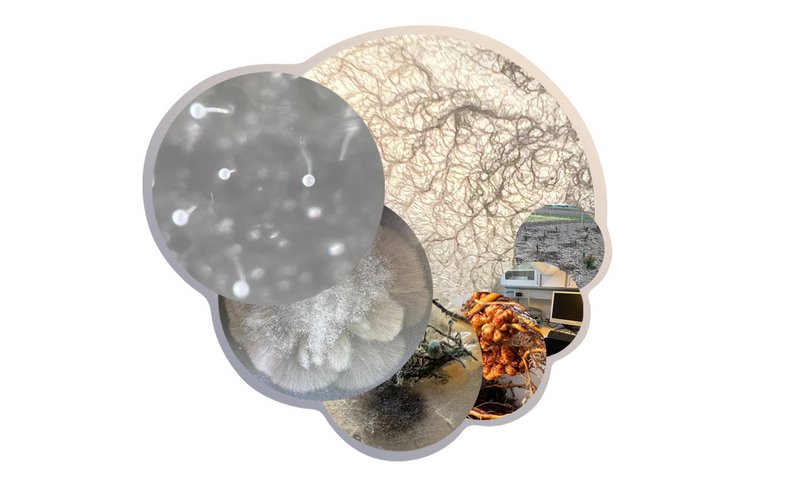
Mo Bahram’s interest in studying the hidden world of soil microbes began during his undergraduate studies. His curiosity led him to specialise in fungal ecology, eventually earning a PhD at Tartu University, an institute known for being a frontier in mycorrhizal research. There, he gained extensive experience in fungal ecology, setting the foundation for his later research.
| Fact box: Mycorrhizal studies Mycorrhizal studies focus on the symbiotic relationships between mycorrhizal fungi and plant roots. These fungi help plants obtain water and nutrients, especially phosphorus and nitrogen, while receiving carbohydrates in return. This relationship plays a crucial role in plant health and growth, making it a key area of research in agriculture, forestry, and climate change. |
Now, as appointed professor, Mo Bahram is leading ambitious projects focusing on the role of microbial interactions in ecosystem resilience and plant health. These interactions span from antagonism to mutualism and remain largely unexplored despite their widespread occurrence and relevance in ecological and practical contexts. His research aims to understand how microorganisms and their interactions influence plant and soil health and ecosystem resilience.
A vision for sustainable agriculture
Mo Bahram’s work is driven by a fundamental question: How can we harness microbial communities through direct interventions or by adjusting land management towards more sustainable agriculture? He specifically focuses on plant-soil-microbe interactions and how these interactions can be leveraged to improve crop performance while reducing the need for chemical inputs and enhancing carbon sequestration.
Through two major grants, including a prestigious Novo Nordisk Foundation (NNF) grant and a Danish Research Foundation (DRNF) Chair grant, he is leading a research team that will address some of the most pressing challenges. His projects aim to develop a comprehensive understanding of how environmental changes impact soil microbial communities and how these changes, in turn, affect agricultural productivity and ecosystem resilience.
Deciphering plant-soil interactions
One of Prof. Bahram’s major projects focus on understanding mechanisms by which plant-microbe and microbe-microbe interactions influence plant health and nutrient dynamics. One of his projects is also to uncover the role of soil microbes and their interactions with plants in driving key ecosystem processes and resilience.
“We know that microbial communities play a crucial role in supporting plant growth and for regulating crucial ecosystem functions such as carbon and nutrient cycling” he explains. “But to truly harness their potential, we need a deeper understanding of how they function, interact with each other and with plants, and respond to environmental changes. Even though recent methodological advances have facilitated studies of plant-microbe interactions, we have only scratched the surface and there is still much to discover.”
Along with developing new tools and methods to assess microbial biodiversity and ecosystem functions, Professor Mo Bahram’s team will address the challenges of studying complex plant-soil-microbe interactions by examining how these interactions influence ecosystem function and resilience. By leveraging cutting-edge technologies, the research will integrate high-throughput molecular techniques for microbial identification, experiments on metabolic interactions and adaptive stress responses, and advanced modelling.
“A deeper understanding of plant-soil-microbe interactions will be crucial for predicting how changes in plant and microbial communities impact ecosystem function and resilience,” Mo Bahram explains. “This knowledge will ultimately contribute to the development of sustainable agricultural practices.”
A global perspective and local impact
Mo Bahram is excited about collaborating with colleagues at Aarhus University to address local and regional agricultural challenges. Denmark’s commitment to sustainable farming and green transition provides a unique opportunity to focus on applied aspects of plant-soil interactions.
“Denmark is an excellent place for research,” he says. “There is a strong emphasis on sustainability, and the resources available make it possible to conduct cutting-edge research with real-world applications.”
Bahram’s enthusiasm extends beyond the lab. As a dedicated mentor, he finds great fulfilment in guiding young researchers, seeing them contribute ideas, and helping shape the next generation of microbial ecologists. His research team is growing, with multiple PhD students and postdoctoral researchers joining the effort to decode the hidden dynamics of soil ecosystems.
Dr. Bahram’s goal is to not only advance scientific knowledge but also apply these insights to develop solutions for a more sustainable agriculture. He envisions his line of research as one that can impact how we approach agriculture, conservation, and climate adaptation.
Contact
Professor Mo Bahram, Department of Agroecology, Aarhus University. Mail: bahram@agro.au.dk