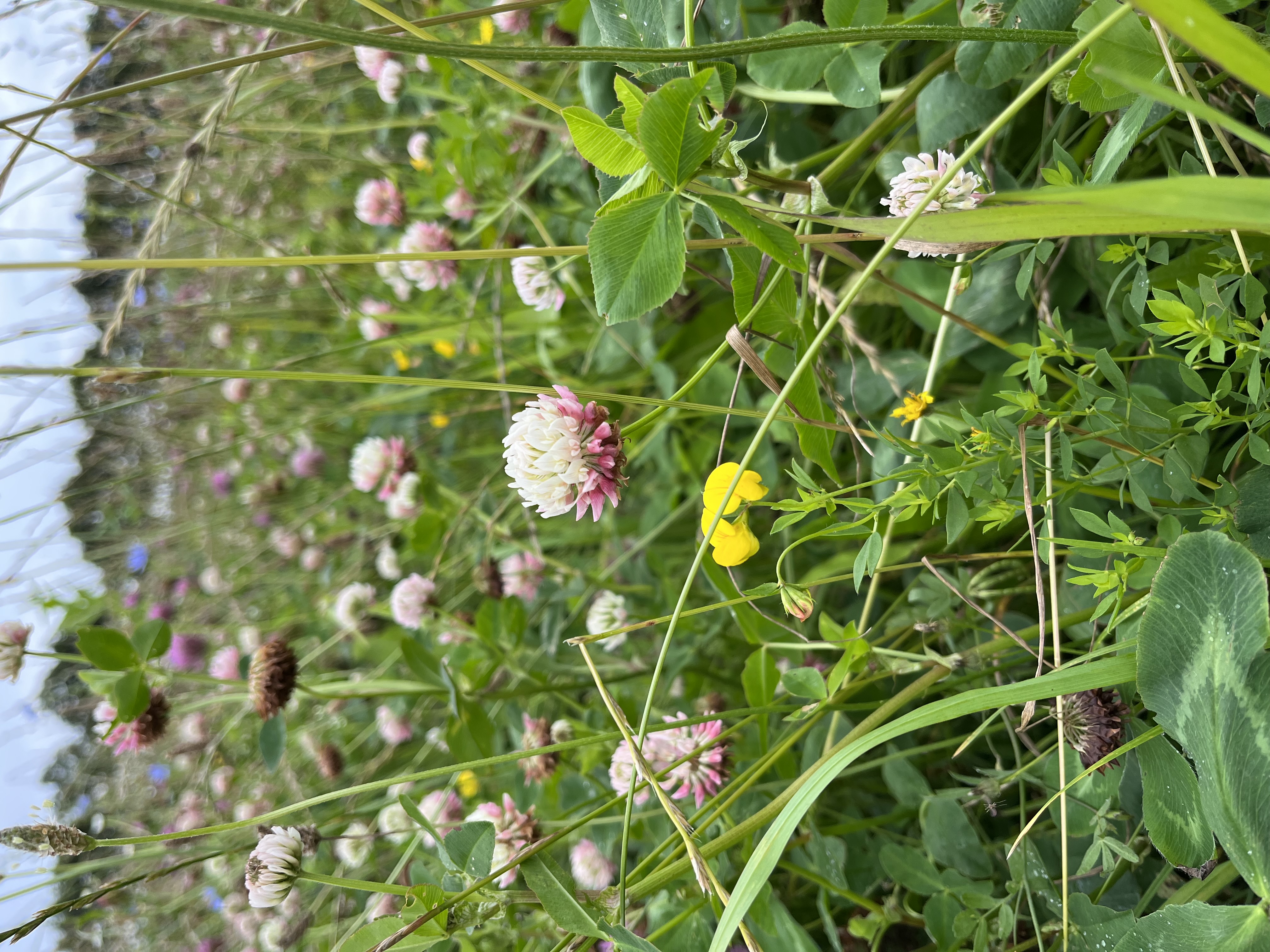
Keywords: Biodiversity, diverse grasslands, botanical composition, technological innovation
Multi-species grassland mixtures can maintain high biomass yields and increase soil carbon inputs under low nitrogen inputs, particularly when balanced species composition is maintained over time (Mortensen et al., 2025a; Mortensen et al., 2025b). However, assessing botanical composition of mixed swards is time-consuming, especially at high species richness, and the accuracy is limited by traditional subplot sampling. New digital droplet-PCR (dd-PCR) technology has proved to be able to quantify species-specific root biomass in the soil of grassland mixtures (Shynggyskyzy et al., 2025), which can reduce the time-consumption related to root biomass sampling. Similarly, the ddPCR method has the potential to estimate botanical composition of harvested biomass with high accuracy, based on fresh biomass samples taken from a larger area. The DNA-based method has the potential to improve botanical assessment efficiency but remains to be tested. Likewise, a task is to investigate whether DNA is allocated differently in different plant organs.
Is field work part of the topic (yes/no)? No
Is lab work part of the topic (yes/no)? Yes
Is coding part of the thesis topic (yes/no)? No. But statistics may be done in R.
Mortensen E.Ø., Abalos D., Engedal T., Lægsgaard A.K., Enggrob K., Mueller C.W., Rasmussen J. (2025a) Smart mixture design can steer the fate of root derived carbon into mineral-associated and particulate organic matter in intensively managed grasslands. Global Change Biology 31. DOI: 10.1111/gcb.70117
Mortensen E.Ø., Abalos D., Rasmussen J. (2025b) Well-designed multi-species grassland mixtures enhance both soil C inputs and aboveground productivity. Agriculture Ecosystems & Environment 385. DOI: 10.1016/j.agee.2025.109578.
Shynggyskyzy N., Madsen C.K., Gregersen P.L., Rasmussen J., Jorgensen U., Brinch-Pedersen H. (2025) Digital PCR enables direct root biomass quantification and species profiling in soil samples. Plant Physiol 198. DOI: 10.1093/plphys/kiaf276.
The project is preferable a 45 or 60 ECTS project but can be adjusted to 30 ECTS.
Project start is flexible, suggested start is autumn 2026 or spring 2027. Several plant species need investigation and methodological development; thus, more than one student can be accepted with separate projects.
The project work can take place in AU Viborg and/or AU Flakkebjerg. Approximately 3-4 weeks of lab work will need to be in Flakkebjerg, the rest is flexible.
30 ECTS (IMSOGLO and Agrobiology): Theoretical thesis based on literature studies and/or analysis of issued and edited data sets.
45 ECTS (Agrobiology): Experimental theses in which the student is responsible for collection and analysis of his/her own original data
60 ECTS (Agrobiology): Experimental theses in which the student is responsible for planning, trial design and collection and analysis of his/her own original data


