Keywords: Heat stress, grain filling, source-sink relations, yield stability
Grain filling represents a critical developmental phase determining final yield and grain nutritional quality. Recent findings indicate that this stage is particularly sensitive to heat stress, with sensitive cultivars exhibiting strong reductions in yield tightly linked to impaired photosynthesis and assimilate supply, while tolerant cultivars maintain performance. These contrasting responses suggest that specific physiological and metabolic processes during grain filling act as heat-sensitive bottlenecks.
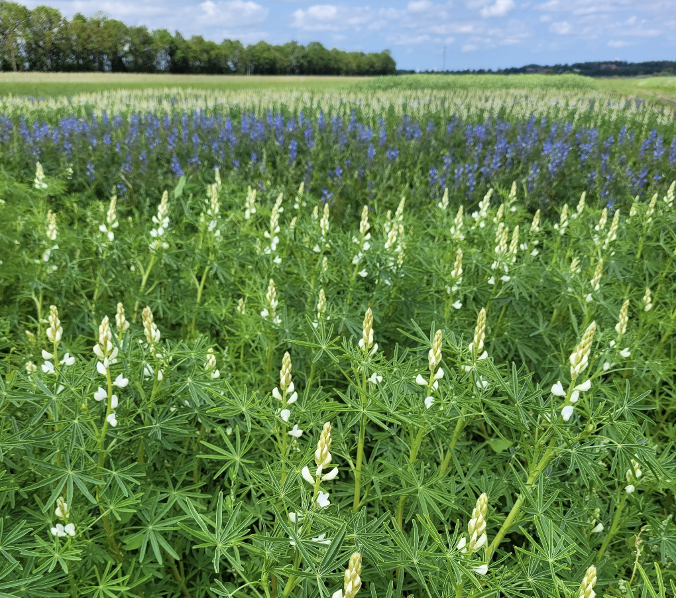
This project aims to identify the cultivar-dependent components underlying heat susceptibility during grain filling. Using contrasting lupin cultivars, we can analyze source–sink dynamics, carbohydrate partitioning, nitrogen remobilization, and grain metabolic activity under heat stress in controlled environment (state of the art greenhouse and climate chamber facilities). By integrating physiological measurements, the study will pinpoint the processes that determine yield stability and grain composition under elevated temperatures. The results will provide mechanistic insight into grain-filling resilience and identify concrete physiological targets for breeding climate-resilient lupin cultivars.
The methods and further details of the project can be further modified based on student’s interests.
Is field work part of the topic (yes/no)?
No
Is lab work part of the topic (yes/no)?
Yes
Is coding part of the thesis topic (yes/no)?
No (not beyond the statistical analysis of student’s data)
Any time based on student’s schedule
Department of Food Science of Aarhus University (Agro Food Park 48, 8200 Aarhus)
30 ECTS (IMSOGLO and Agrobiology): Theoretical thesis based on literature studies and/or analysis of issued and edited data sets.
45 ECTS (Agrobiology): Experimental theses in which the student is responsible for collection and analysis of his/her own original data
60 ECTS (Agrobiology): Experimental theses in which the student is responsible for planning, trial design and collection and analysis of his/her own original data

