Keywords: Heat stress, floral resilience, re-flowering, yield stability, stress physiology
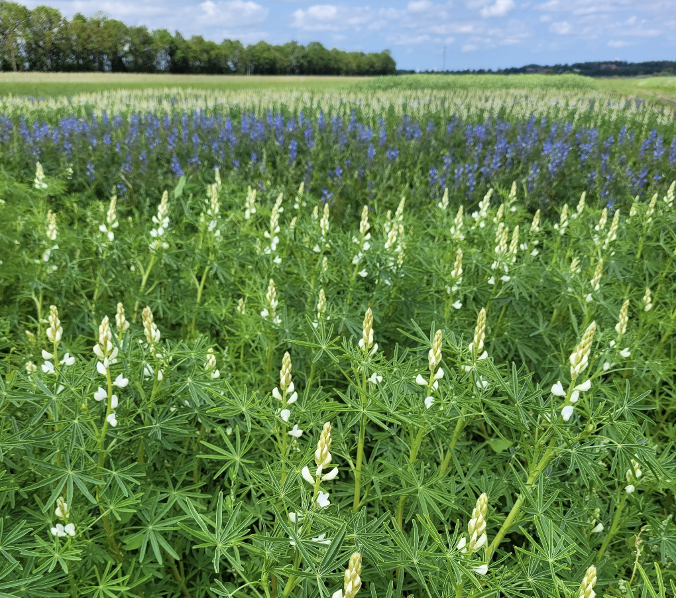
Heat stress during reproductive development is a major constraint on yield stability in grain legumes. However, recent findings indicate that anthesis in lupin remains surprisingly resilient to heat episodes, in contrast to the marked sensitivity observed during grain filling. It remains unclear whether this apparent tolerance reflects intrinsic protective mechanisms safeguarding flower development or compensatory re-flowering on lateral branches following stress release.
This project will investigate the physiological basis of yield stability under heat stress at flower spike emergence. We will quantify biomass allocation to reproductive structures, flower abortion rates, pollen viability, re-flowering dynamics, and physiological parameters using chlorophyll fluorescence and gas exchange (students can be trained in all methods, thus these do not represent prerequisites) under stress and recovery conditions in controlled environment (state of the art greenhouse and climate chamber facilities). The project aims to distinguish between active floral resilience and post-stress compensation mechanisms, providing insights to support breeding strategies for enhanced reproductive heat tolerance in lupin.
The methods and further details of the project can be further modified based on students interests.
Is field work part of the topic (yes/no)?
No
Is lab work part of the topic (yes/no)?
Yes
Is coding part of the thesis topic (yes/no)?
No (not beyond the statistical analysis of student’s data)
Any time based on student’s schedule
Department of Food Science of Aarhus University (Agro Food Park 48, 8200 Aarhus)
30 ECTS (IMSOGLO and Agrobiology): Theoretical thesis based on literature studies and/or analysis of issued and edited data sets.
45 ECTS (Agrobiology): Experimental theses in which the student is responsible for collection and analysis of his/her own original data
60 ECTS (Agrobiology): Experimental theses in which the student is responsible for planning, trial design and collection and analysis of his/her own original data

