Main subject area: Biodiversity and natural resources, farm practices and policy, societal and economic aspects of agriculture, climate change and agriculture, environment impact and sustainability
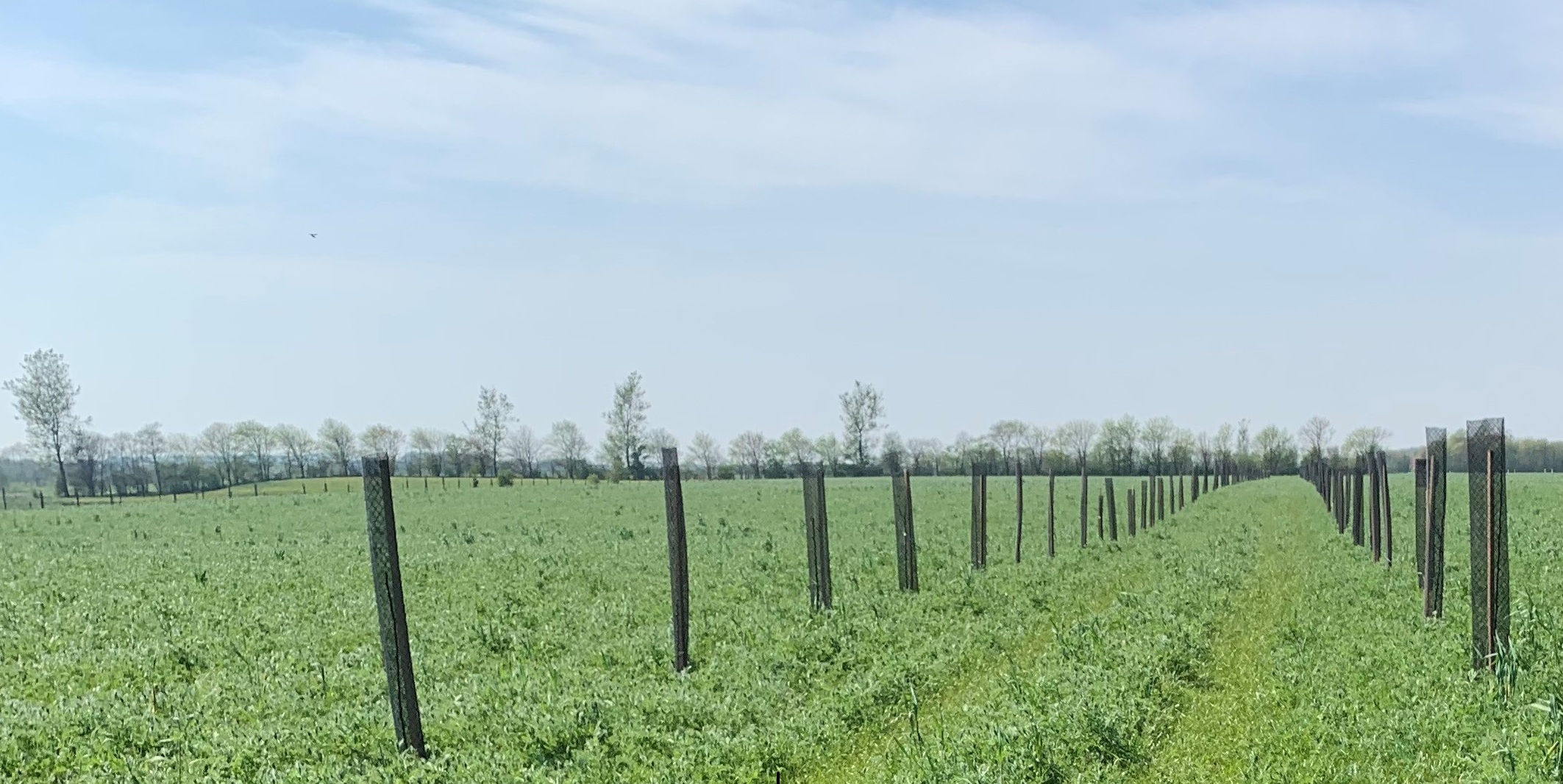
Increasing attention to agroforestry as provider of ecosystem goods and services has put agroforestry in focus globally as a key tool for curbing climate change, soil degradation and the biodiversity crisis. Despite this, the use of agroforestry remains very limited in Denmark, and there is a lack of scientific documentation of its effects.
The bachelor/master project will be conducted in collaboration with the OASIS (Organic Agroforestry to Strengthen and Increase Sustainbility) project. OASIS aims to assess potentials for producing quality products and at the same time ensuring financial sustainability and resilience for the farmer in collaboration with Gram Slot and Øm Klostergaard.
A bachelor/master project can aim to document the effect of newly established agroforestry on biodiversity, including insects, birds, and soil fauna. It can also include aspects of crop production and financial viability in agroforestry systems.
Is field work part of the topic (yes/no)?
Projects can include fieldwork or they focus on identification and investigation of already collected insect data or focus on data analysis
Is lab work part of the topic (yes/no)?
No
I coding part of the thesis topic (yes/no)?
No
Campus AU (Building 1120) as well as fieldwork at Gram Slot in southern Jutland and/or Øm Klostergaard near Roskilde
Ecoscience, OASIS project
Agroforestry, biodiversity, organic farming
30 ECTS (Agrobiology): Theoretical thesis based on literature studies and/or analysis of issued and edited data sets.
45 ECTS (Agrobiology): Experimental theses in which the student is responsible for collection and analysis of his/her own original data
60 ECTS (Agrobiology): Experimental theses in which the student is responsible for planning, trial design and collection and analysis of his/her own original data
