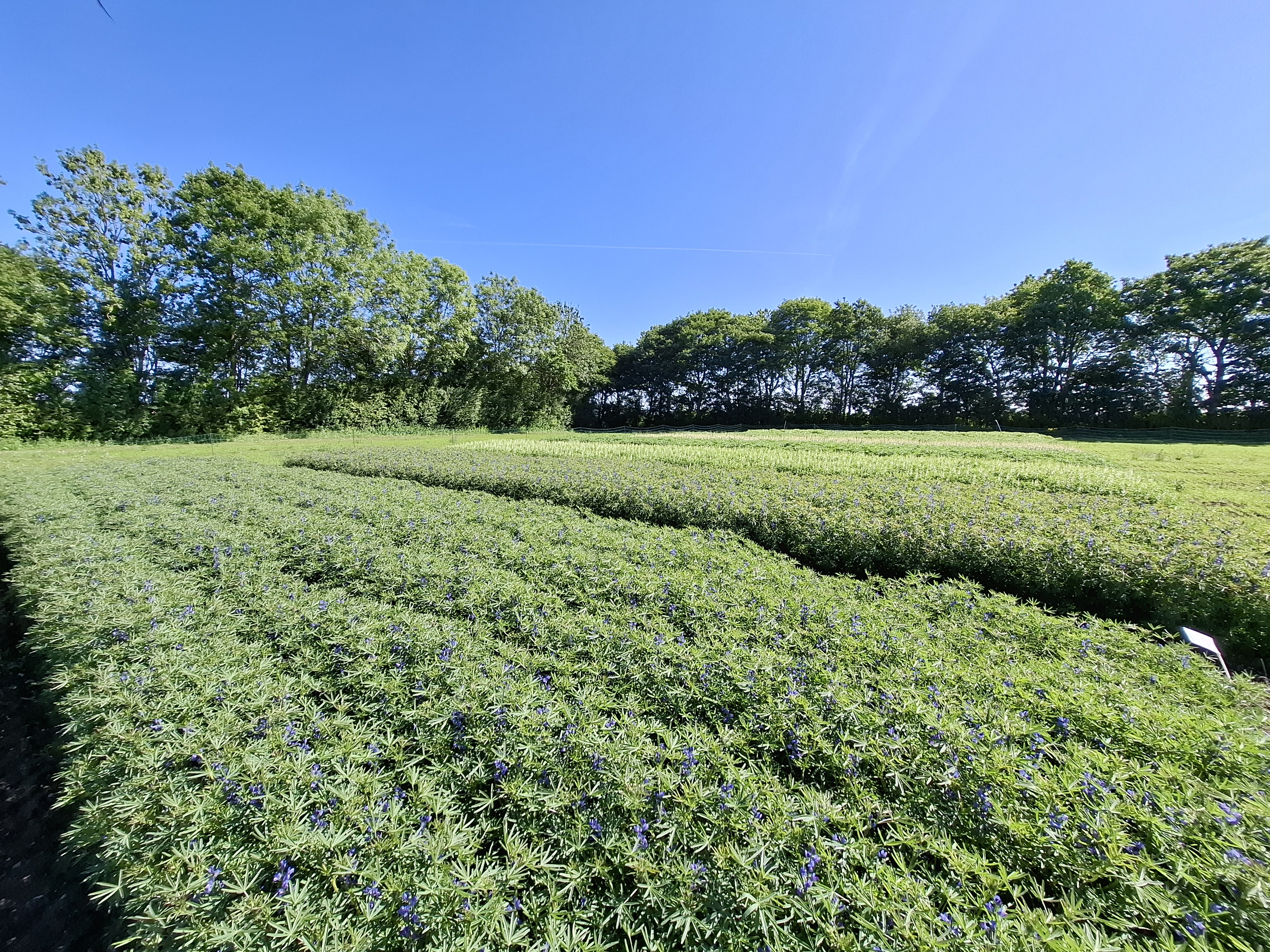
Keywords: Lupin, soybean, plant protein, low-input agriculture, climate-smart farming, sustainable food systems, crop management, biodiversity, green transition, environmental sustainability
How can Denmark grow the future of food while improving climate and environmental outcomes? This project places the student at the forefront of the plant-based transition by developing low-input, climate-friendly lupin and soybean systems for high-protein foods.
The thesis involves field experiments and sustainability assessments to design cropping systems that require fewer inputs, enhance soil health and biodiversity, and reduce dependence on imported plant-based food. Research includes variety selection, crop management strategies, and analyses of climate and environmental impacts. In collaboration with food companies and retailers, the work connects field production to real food products and market potential. The project contributes directly to Denmark’s green transition and supports the development of resilient, locally grown plant protein sources for sustainable diets.
Is field work part of the topic (yes/no)?
Yes
Is lab work part of the topic (yes/no)?
Yes
I coding part of the thesis topic (yes/no)?
Depends on the students desire
Preparation can start anytime
Main field season: April–October 2026
Department of Agroecology, Aarhus University
Foulumgaard Experimental Station, Denmark
30 ECTS (IMSOGLO and Agrobiology): Theoretical thesis based on literature studies and/or analysis of issued and edited data sets
45 ECTS (Agrobiology): Experimental thesis with student collection and analysis of their own data
60 ECTS (Agrobiology): Experimental thesis including planning, field work, and data collection/analysis
The thesis is part of a large research project on Danish-grown plant proteins for human consumption.
Students may work within one or more experiments:
• Variety selection (lupin/soybean)
• Soybean crop management
• Lupin crop management
• Climate impact on soybean
Collaboration with food producers and retailers provides value-chain insight from field to food product.
Useful qualifications:
• Interest in sustainable agriculture and climate solutions
• Basic agronomy or crop science knowledge
• Willingness to conduct fieldwork
• Basic statistics/data analysis skills
Project website:

