Agrivoltaics is an emerging approach that combines agricultural production with photovoltaic (PV) electricity generation on the same land. By integrating crops and solar panels, this system can make efficient use of space while creating potential benefits for both food and energy production.
In agrivoltaics the photovoltaic systems are designed so crops can grow around or underneath them. The panels can support plant growth by providing partial shade, reducing water loss, and protecting crops from strong winds and extreme weather, while generating clean electricity.
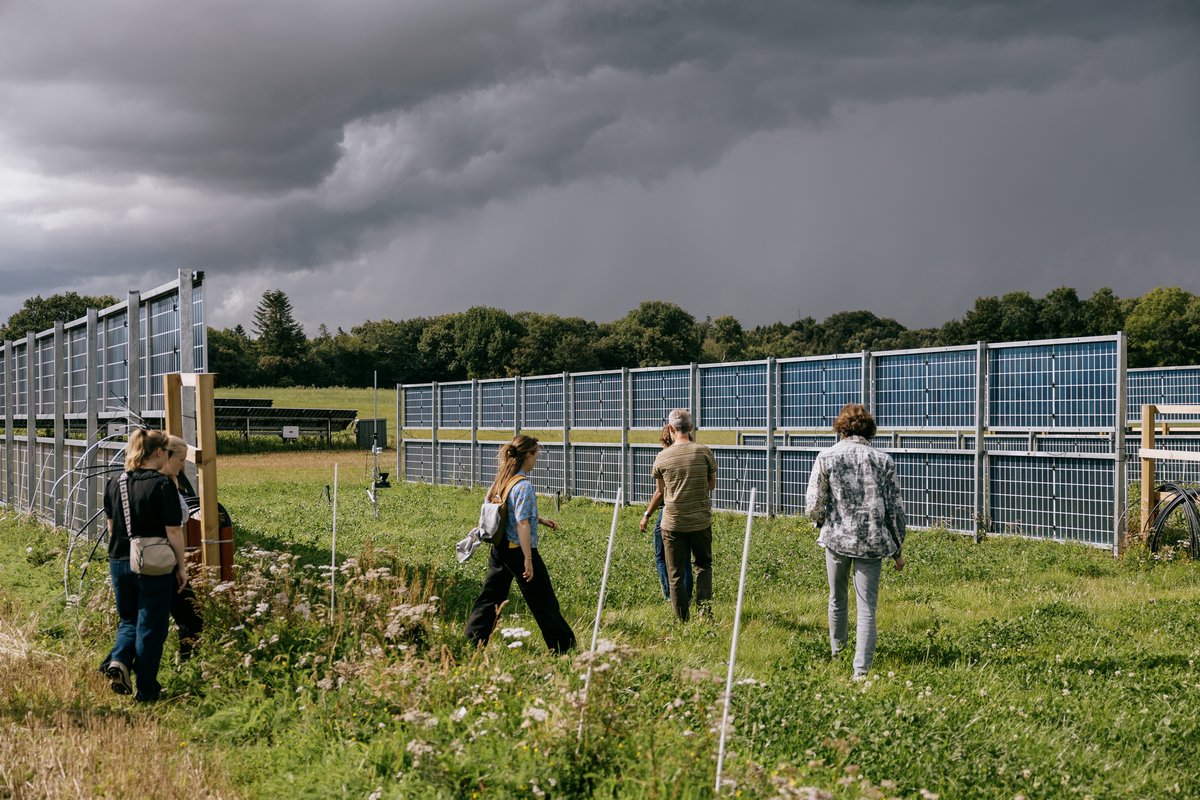
Vertical bifacial solar panels further expand these possibilities by acting as windbreaks while capturing sunlight from both sides. Overall, agrivoltaics offers a promising way to improve land-use efficiency and support both sustainable agriculture and renewable energy production.
Our research focuses on how agrivoltaics affects the microclimate around crops, and how these changes influence crop yield and quality in humid and windy conditions. We study how crop production can be effectively integrated with solar energy generation, exploring how agrivoltaics systems can deliver both food and electricity from the same land. We also test new plant species to assess their performance—not only in terms of yield and quality, but also their environmental impact and their ability to benefit from the altered microclimate.
We run field experiments with solar panels in conventional fixed tilt setups, vertical solar panel configurations, and reference fields without solar panels for comparison. These experiments are combined with with “remote sensing data” and process-based modelling to generate robust and actionable instights. By integrating measurements and modelling, our work supports energy creation with agricultural practices aiming to benefit both farmers and the environment.