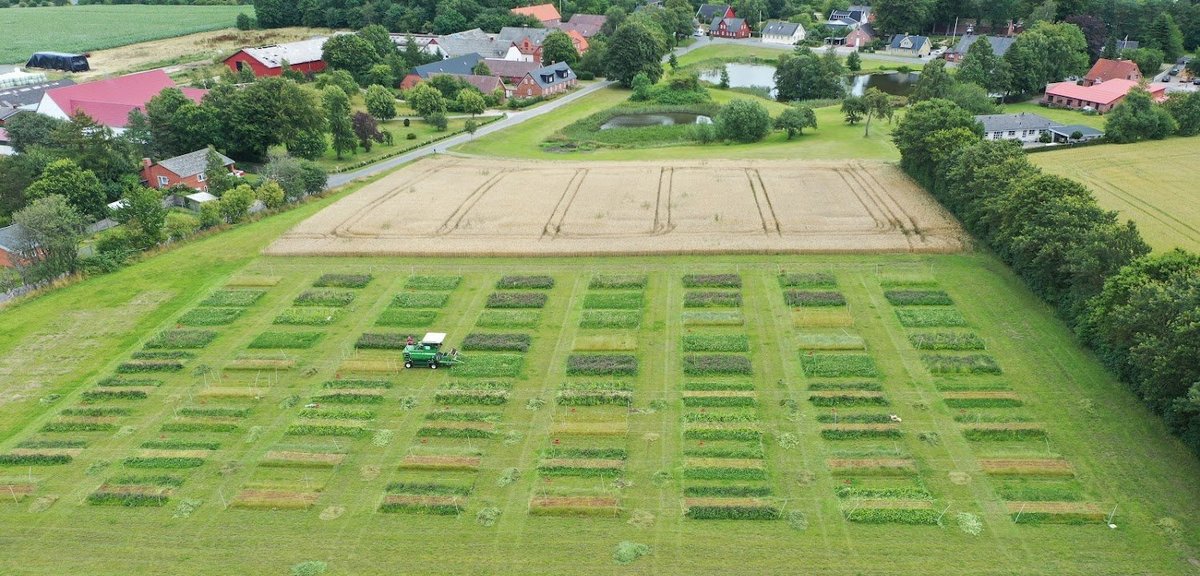
The transition of our society to become biobased require a substantial production of biomass to act as the raw materials for biorefining and bioenergy, while still sustaining a sufficient food production. We work to integrate high yielding biomass production in future food cropping systems. In that sustainable crop and biomass production focuses on developing agricultural systems that maintain high productivity while reducing environmental and climate impacts and enhancing ecosystem services. Our research focuses on how cropping systems, crop productivity, soil processes, and nutrient cycling influence carbon (C) and nitrogen (N) dynamics, and greenhouse gas emissions (GHG) in agroecological systems. This knowledge supports the development of resilient and resource-efficient systems based on grasslands, cover crops, and diversified crop rotations.
We provide knowledge about:
- Development of new value chains for utilization of more resource efficient cropping systems (e.g. biorefining, building materials, bioenergy, perennial grain)
- Plant-soil interactions and carbon and nitrogen dynamics
- Net ecosystem exchange of CO2 and nitrous oxide (N2O) emissions
- The role of roots and crop diversity for soil carbon inputs and stabilization
- Nitrogen cycling, retention, and loss pathways
- Effects of perennial cropping systems, legumes, cover crops, and crop mixtures on soil health and productivity
- Radiation interception in green leaves across seasons for calculation of Radiation Use Efficiency and for maximizing biomass production
We carry out:
- Field experiments on grasslands and new cropping systems including multispecies mixtures, cover crops, and diversified crop rotations
- Evaluation of perennial crops such as perennial grain, miscanthus, willow and poplar
- Measurements of soil carbon, roots, and nitrogen dynamics
- Studies of belowground processes and nutrient cycling
- Manual and automated chambers for assessment of carbon balance and GHG emissions
- Inventories of national biomass scenarios utilising the above knowledge for impact assessments
- Collaboration with farmers and other stakeholders to develop sustainable production systems