Askov Experimental Station
The long-term C3- to C4-conversion experiment was initiated in 1996.
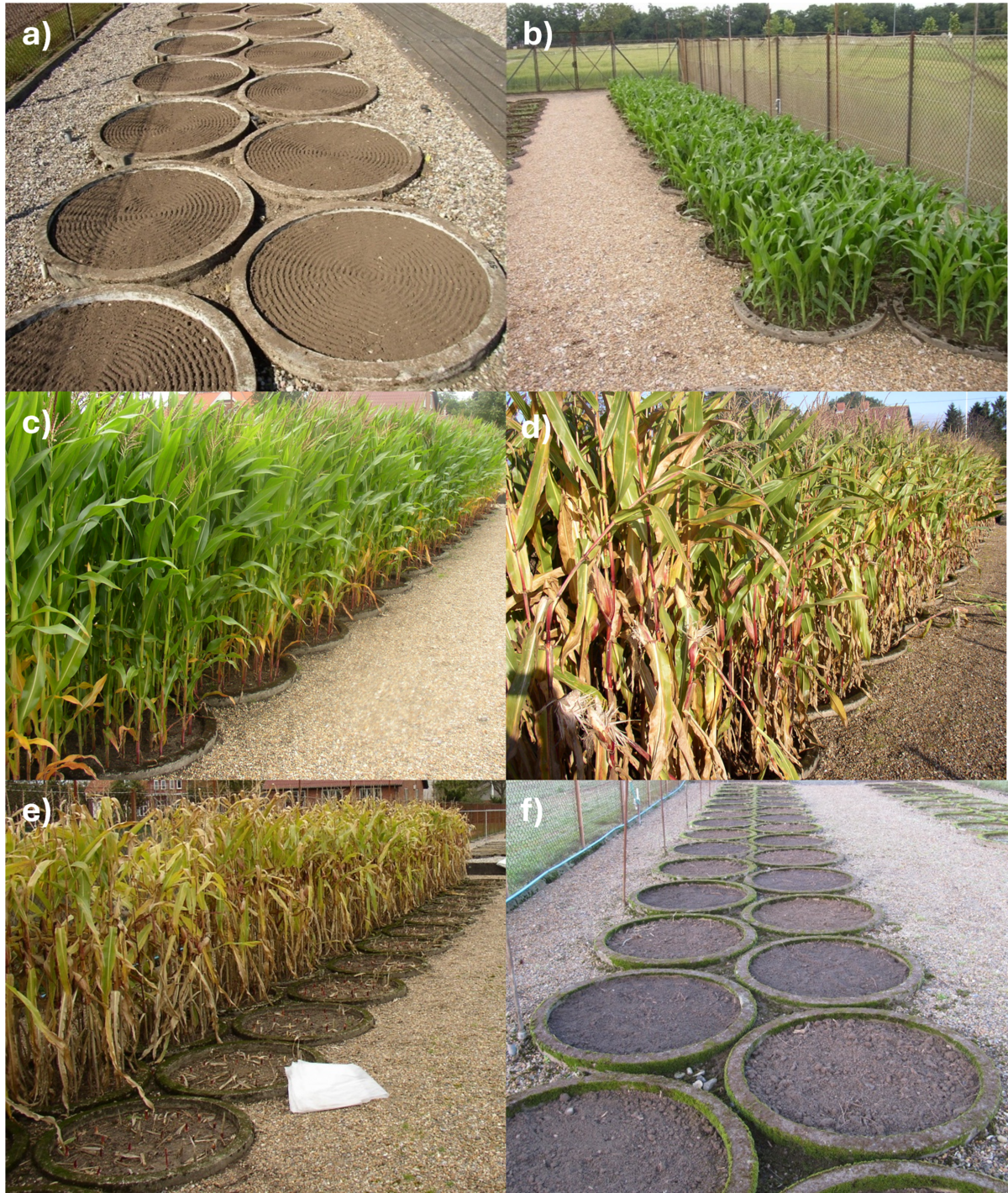
The C4-crop, silage maize, is the crop grown in the experiment. Its distinctive type of photosynthesis allows for the tracing of changes in the natural abundance of 13C, thereby enabling the fate of carbon-derived residues derived from maize to be elucidated (C4-SOC). In addition, the decay of changes in old C3-SOC can be investigated. Thus, the changes in the otherwise “hidden” SOC pools can be revealed. The experiment stands out as the only C3- to C4-conversion experiment specifically designed to achieve the above objective.
Askov: Sandy loam, Inceptisol, Ochrept.
Lundgaard: Sandy soil, Alfisol, Hapludalf.
The harvest yield from each cylinder is estimated on an annual basis, with a subsample being archived for subsequent analysis. Soil samples are taken every fourth year, air-dried, 2-mm sieved and archived.

