Keywords: Nitrous oxide (N₂O), methane (CH₄), nitrate leaching, nitrogen cycling, greenhouse gas emissions, automated chambers, flux-gradient systems, multi-scale measurements, agricultural ecosystems
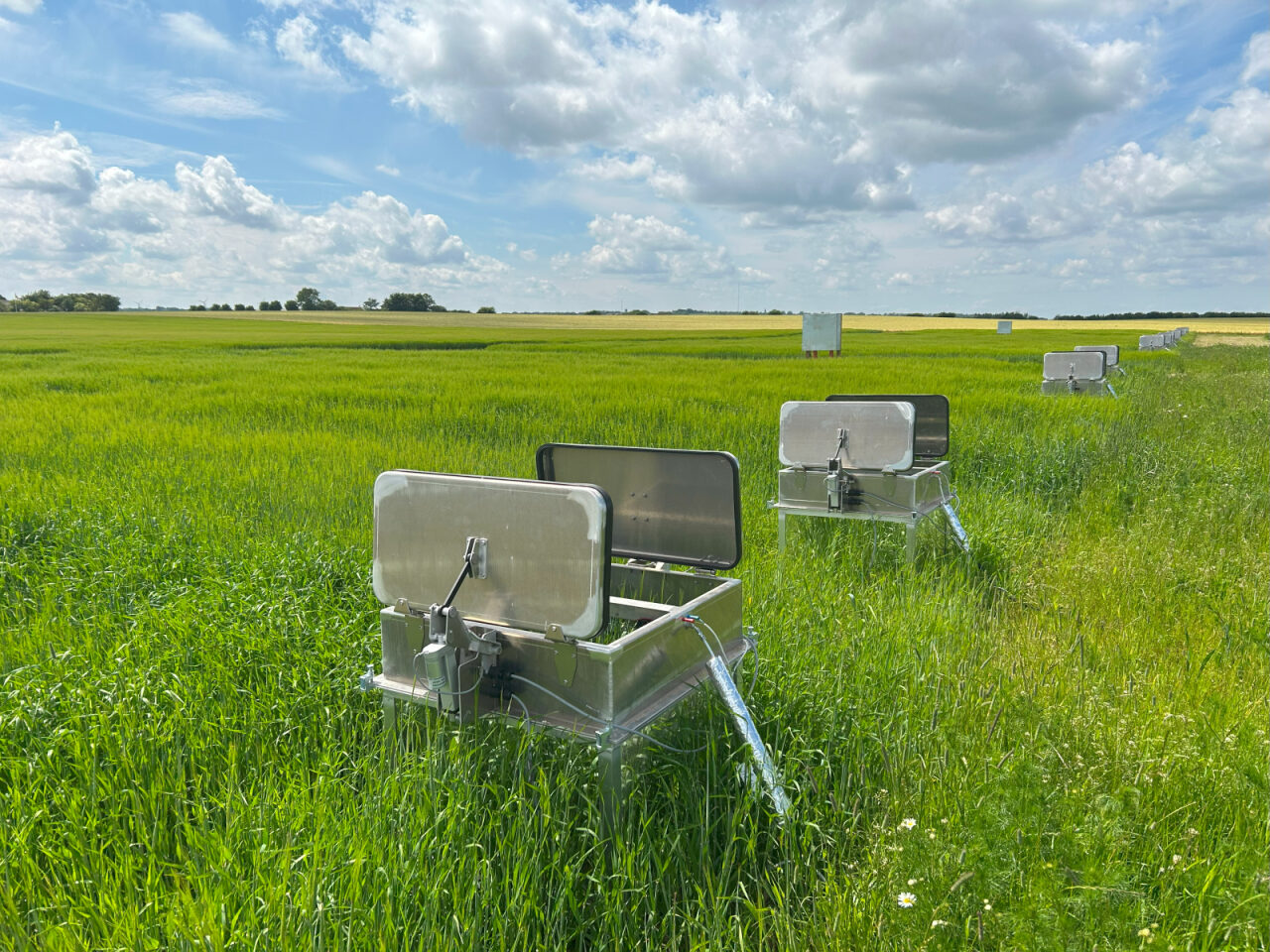
Understanding nitrogen losses and greenhouse gas emissions from agriculture requires observations across scales: from soil processes in small plots to integrated fluxes at the field and ecosystem level. This Master’s project is embedded in SmartField, a flagship research platform funded by the Novo Nordisk Foundation. Students will work with cutting-edge measurements of nitrous oxide (N₂O) and methane (CH₄) using automated chamber systems and flux-gradient towers, combined with high-quality datasets on nitrate leaching.
The unique SmartField infrastructure allows students to explore how nitrogen cycling and greenhouse gas emissions scale from plot-level soil processes to whole-field and ecosystem responses. Depending on interest, the project may focus on field experiments, laboratory analyses, advanced data analysis, or process-based modelling. The work contributes to frontier research aimed at delivering climate-efficient and environmentally resilient agricultural systems.
Is field work part of the topic (yes/no)?
yes
Is lab work part of the topic (yes/no)?
yes
Is coding part of the thesis topic (yes/no)?
yes
Flexible – projects can start at any time during 2024–2029
The project is anchored at Aarhus University, with access to SmartField Supersites across Denmark. These sites host internationally unique infrastructures that enable measurements from small experimental plots to full agricultural fields and ecosystem-scale flux towers.
30 ECTS (Agrobiology / IMSOGLO): Data-driven or literature-based thesis using existing SmartField datasets
45 ECTS (Agrobiology): Experimental thesis including student-led data collection and analysis
60 ECTS (Agrobiology): Full experimental thesis with data collection, and advanced, multi-scale analysis
Students joining SmartField gain access to one of the most advanced agricultural measurement platforms in the world, offering simultaneous observations of N₂O, CH₄, and nitrate leaching across multiple spatial scales. The project provides hands-on experience with automated instrumentation, ecosystem-scale flux measurements, and large, complex datasets. A background in soil science, environmental science, agronomy, ecology, physics, or data science is recommended. Curiosity, ambition, and a strong interest in climate and ecosystem science are key qualifications; technical training will be provided.


