
Europe sets its sights on soil health – and Denmark leads the way
Biodiversity loss. Declining water quality. Rising emissions. But where does soil health fit into the green agenda?
This week, European Mission Soil Week 2025 turned the spotlight on exactly that question. The Department of Agroecology at Aarhus University hosted and co-organised the event as part of Denmark’s EU Presidency.

Two days of knowledge, dialogue and collaboration
Over two days, researchers, policymakers, businesses and farmers from across Europe gathered in Aarhus to discuss how to secure healthy soils – not only as an environmental objective but as a business model, a political priority, and a shared responsibility.
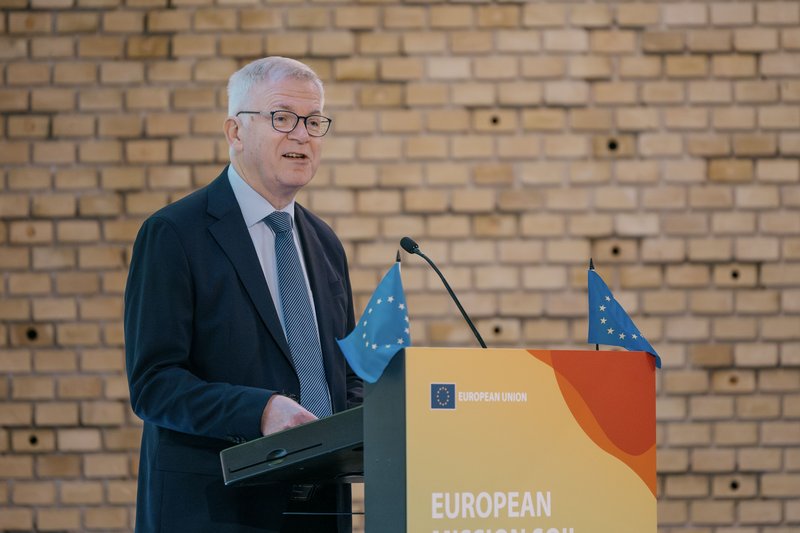
In his opening address, Rector Brian Bech Nielsen emphasised that research must inform policy and pointed to the new Soil Monitoring Law as a concrete example of this vital interplay. The law fills an important gap between existing directives and, for the first time, establishes a comprehensive European framework for soil health. It also introduces new incentives and support schemes to help farmers improve soil health through advice, training and capacity building.
You can read more about the new Soil Monitoring Law here.
The Danish model in the European spotlight
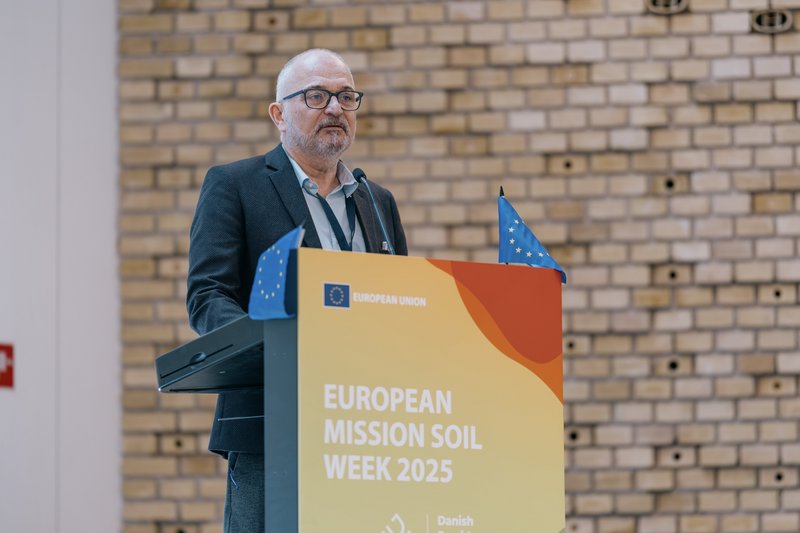
Professor Jørgen E. Olesen, Head of the Department of Agroecology, highlighted that the challenges surrounding soil health are complex and require all actors to work together, guided by a shared understanding and common language. He pointed to Denmark’s Green Tripartite Agreement as a model for how cross-sector collaboration can lead to tangible results: “How could the green tripartite agreement happen? Because all parties recognised a common crisis – and engaged stakeholders across farming, research, environmental organisations, and policy makers,” he said, while also stressing the need for Living Labs as a tool for co-creation and for developing new, economically viable solutions.
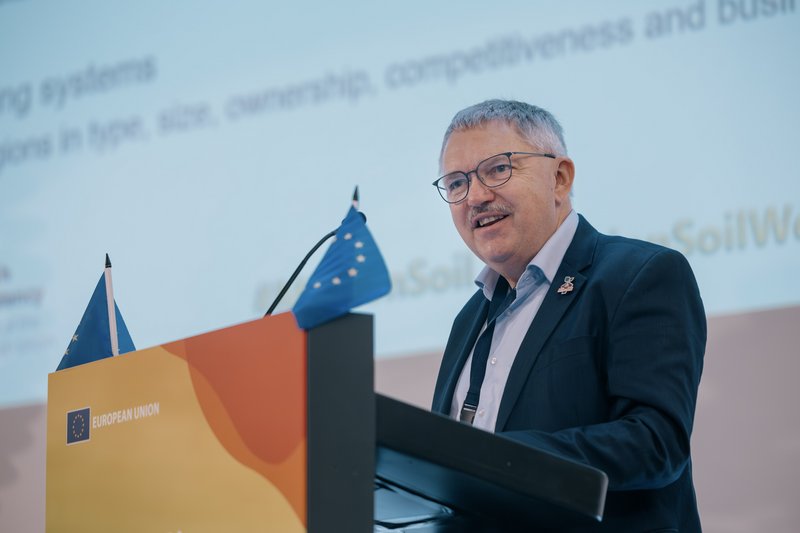
Denmark’s approach has attracted broad attention across Europe. As Diego Canga Fano from the European Commission’s Directorate-General for Agriculture and Rural Development put it: “Denmark deserves recognition for showing that productivity and environmental care can go hand in hand. Danish farmers have long understood that healthy soils are the foundation for both resilience and sustainability.”
“We must act now”
Professor Mogens H. Greve, coordinator of the AI4SoilHealth project and one of the key figures behind the upcoming implementation of the Soil Monitoring Law, reminded participants that soil has been overlooked for far too long:
“We cannot wait 15 years to know whether the indicators are moving in the right direction. We must act now.”
He pointed to experiences from AI4SoilHealth and Masseeksperimentet, which can help lay the foundation for targeted soil management and monitoring across Europe.
From research to practice
Senior Researcher Niels Halberg from AGRO moderated several key panel debates with representatives from Danish Agriculture and Food Council, Agroecology Europe and the European Parliament, discussing policy instruments, governance, and agriculture’s role in the green transition.
Key takeaways included:
- We must speak the same language – across research, policy and farming.
- Research must reach the field and directly inform practice.
- A bottom-up approach is essential – solutions and investments must reach those working with the soil every day.
A historic step for Europe’s soils
The Soil Monitoring Law marks a historic shift – from fragmented regulation to a unified European commitment to soil health.
And in that front line stands Denmark. At the Department of Agroecology, we are proud to have contributed to gathering Europe’s leading experts and policymakers.