Main subject area: Biodiversity and natural resources, plants and crops, climate change and agriculture, environment impact and sustainability
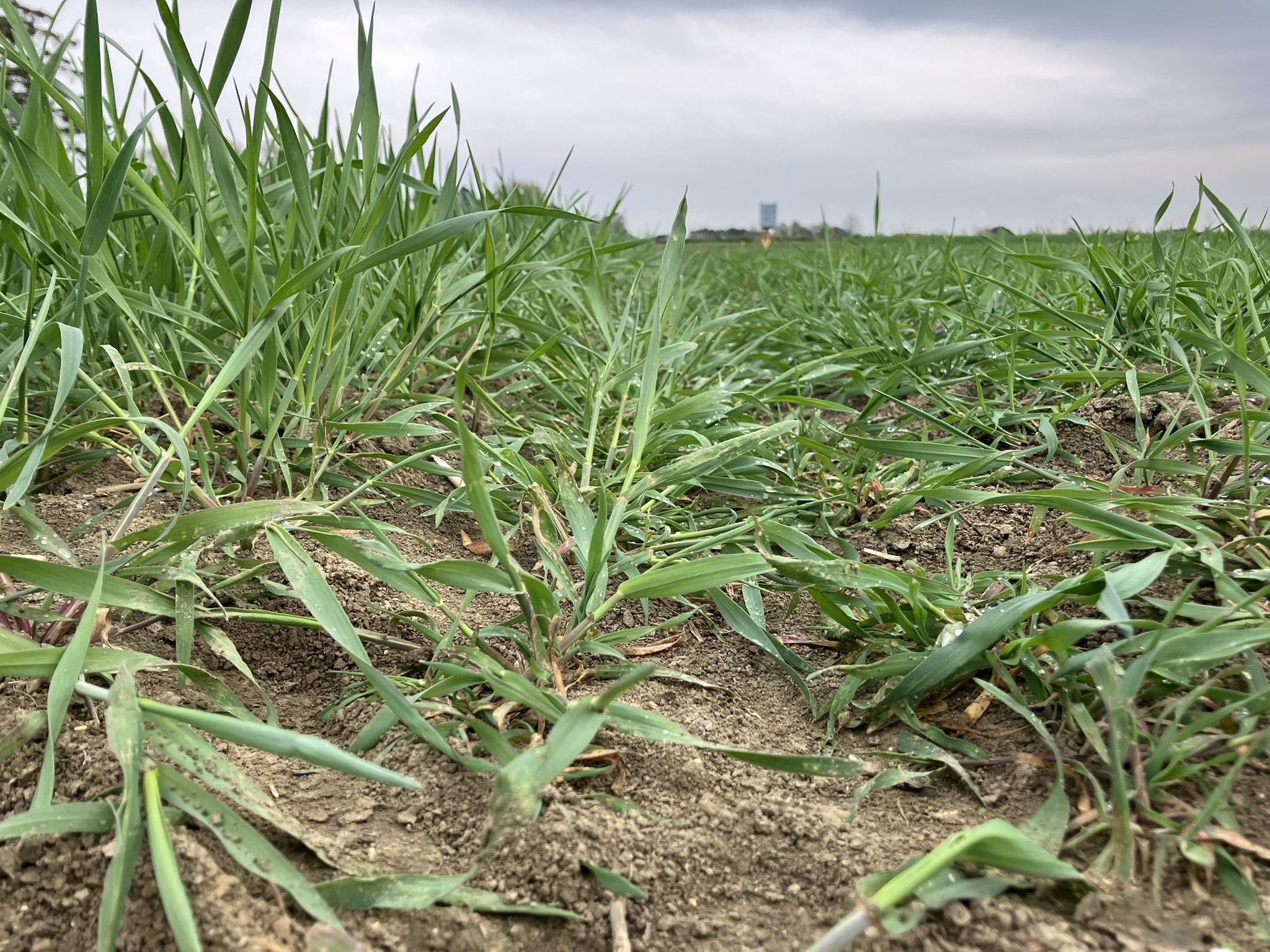
The majority of humanity’s food calories are derived from annual grains, which require re-planting for each harvest. This results in regular disturbance of the soil and fallow periods between annual crops, both of which pose major challenges for soil health. Recently, a perennial cereal rye variety created in Germany in the 1980s through traditional breeding methods has been ‘rediscovered’, and has shown promising yields in Denmark.
Rye has long been valued for its natural weed suppression via the release of allelopathic compounds, which inhibit the successful germination of weed seeds in the soil. It is unknown whether the perennial cereal rye will offer the same favourable weed suppressive abilities (or better) compared to annual rye. Organic producers in particular could benefit from perennial rye as a low-input strategy for weed management.
This project will complement a larger field-based study investigating weed dynamics in perennial and annual cereal rye organic cropping systems. The project will compare the timing, amount, and identity of allelopathic compounds released by annual cereal rye and perennial cereal rye. Samples can be taken from plants grown in a greenhouse setting and/or from the field, depending on the student’s interests and timing of project. Compounds will be analysed using a state-of-the-art high-performance liquid chromatography- mass spectrometry (HPLC-MS).
This project will support student learning about ecologically-based weed control, natural plant-produced compounds, greenhouse-based experiments, field-based experiments, and HPLC-MS analyses. It is expected that the analyses from this project will result in a peer-reviewed paper.
Is field work part of the topic (yes/no)?
Yes
Is lab work part of the topic (yes/no)?
Yes
I coding part of the thesis topic (yes/no)?
Not explicitly
Flexible, any time between now and September 2026
Organic, weed, allelopathy, sustainable agriculture, chemical ecology, ecological weed control, HPLC-MS
Agrobiology
AU Flakkebjerg, Forsøgsvej 1, 4200 Slagelse, Denmark.
45 ECTS (Agrobiology): Experimental theses in which the student is responsible for collection and analysis of his/her own original data
60 ECTS (Agrobiology): Experimental theses in which the student is responsible for planning, trial design and collection and analysis of his/her own original data
Rebong D, Henriquez Inoa S, Moore VM, et al. Breeding allelopathy in cereal rye for weed suppression. Weed Science. 2024;72(1):30-40. doi:10.1017/wsc.2023.64
Glover, Jerry D., J. P. Reganold, L. W. Bell, Justin Borevitz, E. Charles Brummer, Edward S. Buckler, C. M. Cox et al. "Increased food and ecosystem security via perennial grains." Science 328, no. 5986 (2010): 1638-1639.


