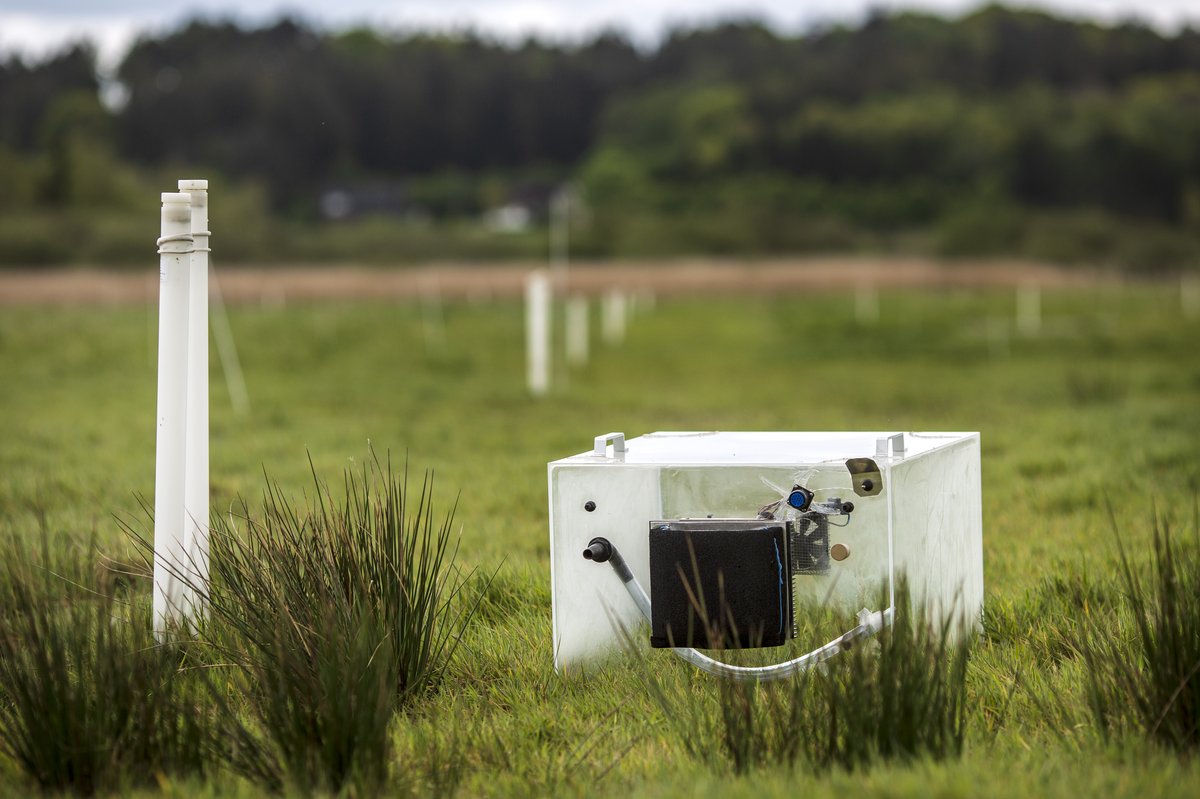
Rewetting peatlands is an important strategy for restoring degraded landscapes and reducing greenhouse gas emissions. Drained peatlands release large amounts of carbon dioxide, contributing significantly to climate change. By restoring the natural water levels, rewetting slows down peat decomposition and helps preserve carbon stored in the soil.
Rewetted peatlands can also be used productively through practices such as paludiculture, where crops are grown under wet conditions. Overall, rewetting offers a nature-based solution that supports both environmental restoration and sustainable land use.
Our research focuses on how rewetting affects greenhouse gas emissions, soil processes, and ecosystem functions in peatlands. We study how changes in water levels influence both the greenhouse gas emissions and carbon storage.
We combine field measurements using eddy covariance systems, as well as automatic and manual chamber methods, to quantify greenhouse gas fluxes at different scales. These measurements are carried out across rewetted and drained peatland sites to enable direct comparison. We integrate these data with modelling to generate robust and actionable insights. Together, this approach supports the development of climate-smart and sustainable peatland management strategies to ensure positive climate impacts.