Aarhus University Seal

Crop protection at Flakkebjerg

The section for Crop Health at AU Flakkebjerg is part of the Department of Agroecology at Aarhus University. We are a leading research team in the field of crop protection in the northern part of the EU and have extensive collaborative activities across all of Europe.

We are GEP certified and carry out many diverse activities in the field of biological efficacy testing – and our history within this area goes back more than 100 years. Our GEP certificate is valid for trials in Sweden where we also carry out a number of trials, especially in specialty crops.

We carry out many different types of trials, but we mainly evaluate the biological effect of different crop protection products, including pesticides, biopesticides and different types of biostimulants.

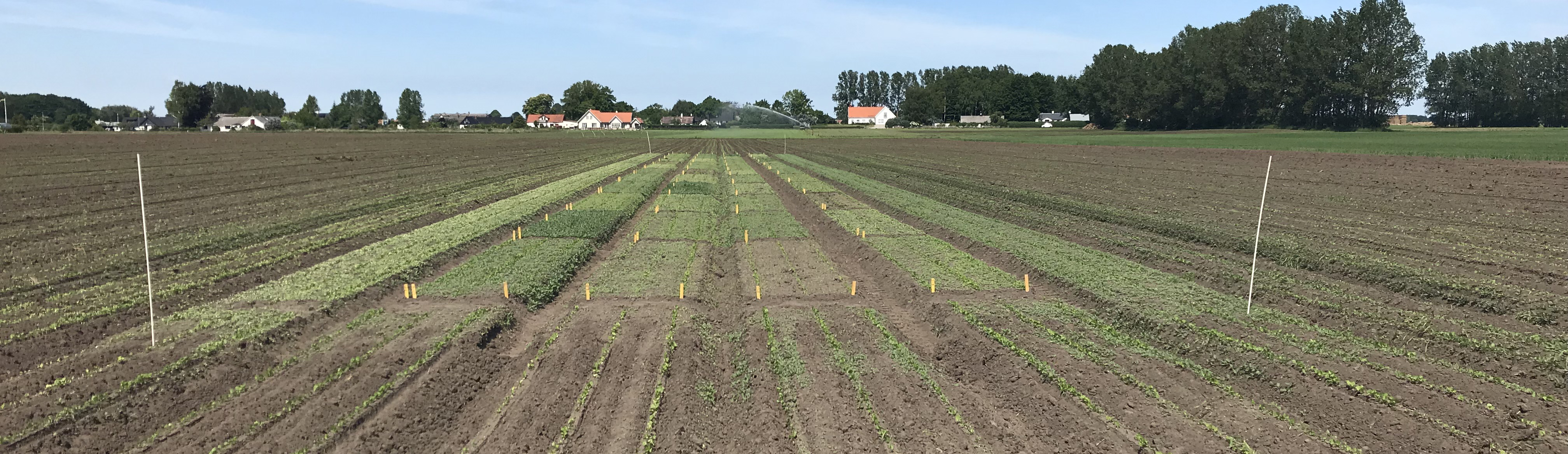
Our facilities are located in Flakkebjerg where we can carry out trials in glasshouses, semi-field and field conditions. It is possible to irrigate half our fields, which ensures an optimal execution of the trials. By means of artificial inoculation we can with great certainty ensure that the crops are infected with carefully selected crop diseases so that we can test the efficacy of different products.

In addition to positive experiences with screening of the biological effects of pesticides and alternative products on diseases, pests and weeds, we have positive experiences with phenotyping of varietal resistance to various diseases for which a specific inoculum is required to ensure the ranking.

Our services cover the testing of:

  • Agrochemicals
  • Biological and biostimulant products
  • Phenotyping of varieties
  • Spray drift activities
  • Resistance to pesticides
  • Efficacy and selectivity screening of pesticides and development of alternative strategies for control of specific pests

Please contact us for a quotation or to discuss your needs.


Publications

Sort by: Date | Author | Title

Madsen, C. K. & Jørgensen, J. R., (2022). Comments to the second draft revision of the consensus document on the biology of wheat (Triticum aestivum L.), No. 2022-0344013, 7 p., Mar 25, 2022. Advisory memorandum from DCA – Danish Centre for Food and Agriculture
Royo-Esnal, A., Onofri, A., Taab, A., Loddo, D., Necajeva, J., Uludag, A., Synowiec, A., Calha, L., Andersson, L., Jensen, P. K., Uremis, I., Economou, G., Murdoch, A. J. & Torresen, K. S. (2022). Comparing the emergence of Echinochloa crus-galli populations in different locations. Part II: similarities and threshold parameters. Weed Research, 62(3), 203-214. https://doi.org/10.1111/wre.12529
Royo-Esnal, A., Onofri, A., Loddo, D., Necajeva, J., Jensen, P. K., Economou, G., Taab, A., Synowiec, A., Calha, L., Andersson, L., Uludag, A., Uremis, I., Murdoch, A. J. & Torresen, K. S. (2022). Comparing the emergence of Echinochloa crus-galli populations in different locations.Part I: Variations in emergence timing and behaviour of two populations. . Weed Research, 63(3), 192-202. https://doi.org/10.1111/wre.12525
Andersson, B., Djurle, A., Ørum, J. E., Jalli, M., Ronis, A., Ficke, A. & Jørgensen, L. N. (2022). Comparison of risk models predicting leaf blotch diseases in wheat based on historical yield and weather data in the Nordic Baltic region. Agronomy for Sustainable Development, 42(3), Article 42. https://doi.org/10.1007/s13593-022-00767-7