Onwards spread of Yr15-virulence in Europe in 2026
Additional spread of Yr15-virulence into Norway, Poland, Hungary and Austria
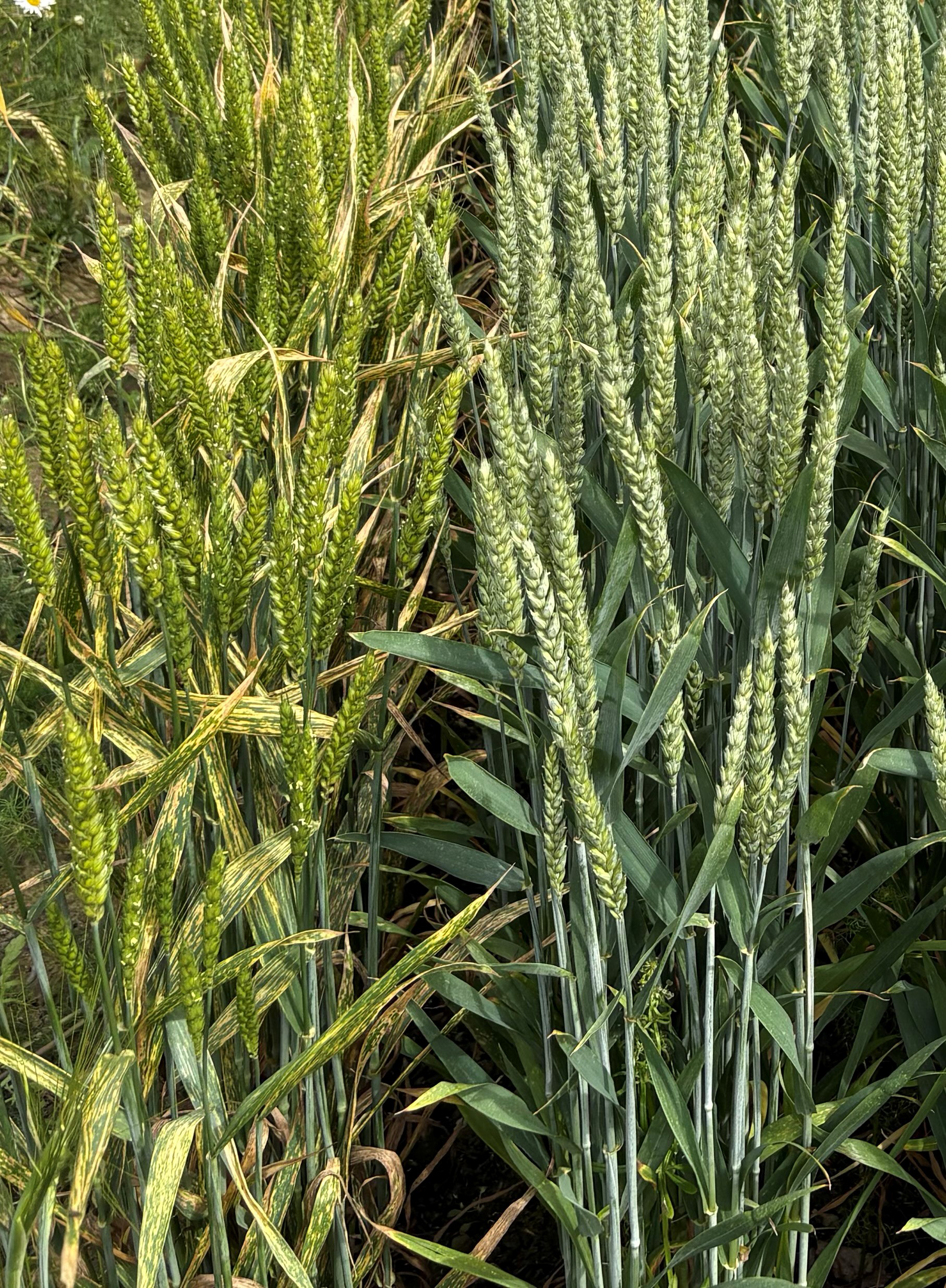
In collaboration with the European Value for Sustainable Cultivation and Use (VSCU) network for wheat, IPMorama partners, and European national rust diagnostic laboratories, the Global Rust Reference Center (GRRC) has tracked the spread of Yr15 virulence across Europe during the 2026 growing season.
“Observations from surveys in sentinel plots of wheat lines deployed on 77 experimental field sites during the 2026 growing season indicated additional spread of Yr15-virulence into Norway, Poland, Hungary and Austria, which is not a surprise based on historic patterns of wheat rust epidemiology in Europe”, says professor Mogens Støvring Hovmøller, leader of GRRC.
These observations are currently being validated through laboratory and greenhouse testing of rust samples collected from the VSCU experimental sites and analysed in the containment facilities of the Global Rust Reference Center (GRRC) in Denmark. Based on experience from the 2025 growing season, all samples submitted from Yr15-resistant wheat grown in the VSCU sentinel plots were subsequently confirmed to carry Yr15-virulence through laboratory testing.
“We have received at least 30 samples from Yr15-resistant varieties in 2026, and follow-on lab tests have confirmed that Yr15-virulence is also common in France”, said Tiphaine Vidal, leader of the yellow rust diagnostic lab at INRAE. Since the initial detection of the Yr15-virulence in the UK in spring 2025, this virulence has now been observed in 13 countries in Western- and Central Europe (AT; BE; CZ, DE, DK, FR, HU, IR; NL; NO, PL, SE; UK). Select Yellow rust and then the cultivar Mariboss as an indicator of YR15 virulence on the mapping tool.
Despite that we see very different patterns of deployment of Yr15-resistant wheat across Europe, the new Yr15-virulent race, termed the Champion race, seems to cause more disease on a wider panel of wheat varieties. This was documented in off-season tests in GRRC lab and green house containment facilities in February-March, where yellow rust vulnerability of more than 120 European elite wheat cultivars from 7 countries was testet against eight diverse races of yellow rust, including the Champion race (news story 12th March).
“We don’t know yet the exact reason for a general increased rust susceptibility on seedling plants of wheat caused by the Champion race. Upcoming research must show whether this is due to additional virulence matching undetected components of resistance, or an increased general pathogen fitness”. Professor Hovmøller continues, “however, the good news is that additional components of resistance controlling yellow rust are already incorporated into commercial wheats. This is the result of a strong commitment towards increased diversity for rust resistance in ongoing wheat breeding programs”.
In addition to monitoring rust prevalence across Europe during the growing season and collecting representative rust samples from the major wheat-growing regions of Europe, the collaboration between the national rust diagnostic laboratories and the VSCU network plays a vital role in facilitating communication with key stakeholders and end-user groups across Europe.
“The feedback we receive from the GRRC and INRAe is very important for us in interpreting our rust field scores, and in answering questions from partners such as seed producers and breeders, who ask us to test their varieties in our VSCU and post-registration trials”, says Damien Eylenbosch, head of the VSCU trials in Belgium.
This means that the prospects for preventing yellow rust through host resistance remain good in Europe. However, it is essential that wheat breeding materials and commercial cultivars are continuously evaluated against the Champion race, as well as other current and emerging races that may evolve or spread into Europe.
Contact Information
Global Rust Reference Center (GRRC)
Aarhus University, Denmark
Prof. Mogens Hovmøller
E-mail: mogens.hovmoller@agro.au.dk
IPMorama Project
Integrating Breeding for IPM into the Deployment Landscape for Wheat, Potatoes, and Grain Legumes
Website: www.ipmorama.eu
Coordinator: Dr Dan Milbourne
E-mail: Dan.Milbourne@teagasc.ie
European VSCU Expert Group
Website: https://www.geves.fr/news-en/eu-vcu-group-annual-meeting/.
Head of VCUS bioagressor resistance testing: Valerié Cadot
E-mail: valerie.cadot@geves.fr.