Wheat vulnerability to yellow rust in Europe in 2026
Vulnerability of European wheat cultivars from seven countries following the emergence of Yr15-virulence in 2026. A survey campaign will start now.
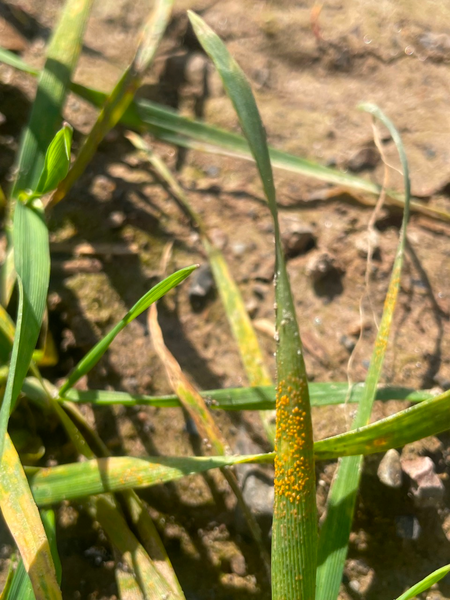
In collaboration with European rust diagnostic labs and IPMorama partners, the Global Rust Reference Center (GRRC, Aarhus University, Denmark) has mapped the prevalence of Yr15-virulence from multiple cultivars and sites in continental Europe based on field observations and follow-up laboratory assessments of rust samples collected at multiple rust epidemic sites in 2025. These activities were followed by off-season tests in GRRC quarantine lab and green house of rust vulnerability of more than 120 European elite wheat cultivars from 7 countries (including the Yr15-virulent race).
Based on initial surveys in “sentinel plots” deployed on more than 80 experimental field sites through collaboration with the European Value for Sustainable Cultivation and Use (VSCU) trial network, indications of Yr15-virulence were established already in the 2025 growing season in UK, Belgium, Holland, Denmark, Sweden France and Czech Republic. Lab and green house tests of incoming rust samples has now documented the Yr15-virulence in all these countries except Czech Republic, and additional samples from Ireland, Germany and France (information from INRAE) confirmed ongoing spread across larger areas in Europe.
“The rapid spread of a single Yr15 virulent race in multiple European countries within a single growing season raises the question about potential impact on rust control in 2026 and following seasons. Fortunately, we were well prepared through activities in IPMorama that were prepared 2-3 years ago. GRRC has now tested more than 120 elite wheat cultivars from seven countries, which revealed big differences in the dependence of Yr15 resistance across Europe, but the results also revealed big differences in vulnerability to the new Yr15 race as well as other races that are currently present in Europe”, said Professor Mogens Støvring Hovmøller, leader of the GRRC and coordinator of wheat rust activities within the Horizon Europe-funded project IPMorama.
New wheat rust early-warning campaign 2026
The RustWatch network and the Horizon Europe project IPMorama facilitate a European wide wheat rust monitoring campaign from March to the end of June 2026 using the Wheat Rust Survey crowdsource App. The idea is to engage stakeholder networks to monitor initial rust infections of yellow, brown and black (stem) rust surviving the winter, and to follow onwards spread of Yr15 – virulence and other races of potential threat to European wheat crops in 2026 and following years.
“We are pleased to see that the visions in IPMorama are activated to address the sudden shift in European rust populations, including the provision of in-season alerts and the testing of the vulnerability of the wheat cultivars in seven countries to date that were planted in the autumn 2025. This demonstrates the importance of European and global collaboration to facilitate crop health threatened by pathogens spread by wind potentially across countries and continents as demonstrated by the current case of wheat yellow rust,” said Dr Dan Milbourne, IPMorama coordinator. “
Information resources:
- Wheat Rust survey campaign on RustWatch
- Survey Campaign Flyer
- Wheat rust survey dashboard
- Results from the VSCU network
- IPMorama news
Contact Information
Global Rust Reference Center (GRRC)
Aarhus University, Denmark
Prof. Mogens Hovmøller
E-mail: mogens.hovmoller@agro.au.dk
IPMorama Project
Integrating Breeding for IPM into the Deployment Landscape for Wheat, Potatoes, and Grain Legumes
Website: www.ipmorama.eu
Coordinator: Dr Dan Milbourne
E-mail: Dan.Milbourne@teagasc.ie
European VSCU Expert Group
Website: https://www.geves.fr/news-en/eu-vcu-group-annual-meeting/.
Head of VCUS bioagressor resistance testing: Valerié Cadot
E-mail: valerie.cadot@geves.fr.